
Choose Your Own Adventure: Using a Classroom Library to Complement Your Curriculum
A classroom library can give students the freedom to read what interests them. But how can you add individualized reading to your already packed schedule?

Let’s be honest, when you went into teaching, you wanted to impart your adoration for reading to your students. You pictured smiling faces as you introduced your favorite novel and spent each class period discussing its shining prose and memorable characters.
Unfortunately, reality hit hard, and between ELA standards, state testing, and weekly vocabulary tests, reading became just another homework assignment. We hold students accountable with quizzes, tests, and essays, and somewhere along the line, reading has become another source of stress in the minds of our students. When every reading assignment is associated with work, it can be hard for students to find a love for it.
However, some teachers are fighting this apathy toward reading with classroom libraries. Giving students more choice with what they read makes reading a low-pressure activity. Who knows? Your students might stop groaning about reading and actually want to do it on their own. We can at least dream.
You may have concerns: What is the benefit of all my students reading different books? How do I hold them accountable? Where do I get the time to fit independent reading into my already packed curriculum? These are valid questions. However, you don’t have to work harder when it comes to classroom libraries. They can be very easy to incorporate into your curriculum and allow for more reading while focusing on other important aspects of ELA.
Get inspired by these benefits of adding a library to your classroom:
1. When students get to choose, they’re more invested.
Having a wide variety of options to suit your students’ interests can offer an enjoyable independent reading experience. When introducing the classroom library, ask students to think about their interests, and challenge them to find a book that matches.
Set timeframes for when their book should be finished to hold them accountable, but keep this reading low stakes. The goal is to get students interested in reading, while eliminating the stress.
2. Keep them reading while focusing on other aspects of ELA.
Giving students an opportunity to read independently allows for more time to hone in on other ELA skills. Starting a research project? Focus class time on brainstorming, writing, and editing, while knowing students are still reading. Want to focus one day a week on vocabulary practice? Do so guilt free, as students practice reading on their own time.
Offering independent reading opportunities takes the pressure off of you and your students and allows you to keep your attention on the skills you want to spend more time on.
3. Get creative with assessments.
One of the most intimidating aspects of assigning independent reading is justifying its value in the classroom. When every student is reading something different, how do you assess them in a common way? This is a great chance to get creative!
Have students write a review that can be left in the book for future students, focusing on themes, favorite moments, relatability, and literary devices to look out for. This is a way to assess common skills, while keeping the content individualized.
You can also assign students to present or create something that addresses one literary element you want to focus on. If you want students to understand characterization, students can create a playlist for their favorite character in the book. A unit on poetry can involve students finding a poem that reflects a theme in their book and present their similarities. Keep it fun and personalized, while still bringing value to the assessment.
4. Expose students to more current literature.
The classics are a staple for any ELA classroom, but modern literature also has plenty of value. Sometimes, we want to cover topics that are relevant but also want to make sure they have literary merit. Build your classroom library to reflect the ideas you want students to learn.
If you’re pursuing a unit on a specific theme or current event, offer novels with that theme or that are set in that time. If you want to blend STEM and ELA, there are plenty of nonfiction reads and sci-fi books with excellent characterization. If your students seem to be movie buffs, stock your classroom with books that have been turned into film.
Show that reading can be current and applicable to their interests beyond the classroom.
5. Become a safe escape for students.
Your classroom library can be a great place for students to come to decompress in a safe environment. If students have a distracting study hall, lunchtime woes, or just need an extra credit opportunity for your class, offering a book as a getaway from the day can give students an unexpected boost in morale. Promoting reading as a leisurely activity makes it feel less like a chore and more of a comfort.
However you choose to create your library, the value of instilling a love of reading is immeasurable. Of course, building a classroom library takes planning and funding. Luckily, with Prestwick House’s Classroom Library Packs, building a classroom library can be easy and affordable. We carefully curate and package our titles based on grade level and subject matter specific to your students’ interests. Additionally, Classroom Library Packs offer our biggest paperback discount—35% off the retail price of each book!
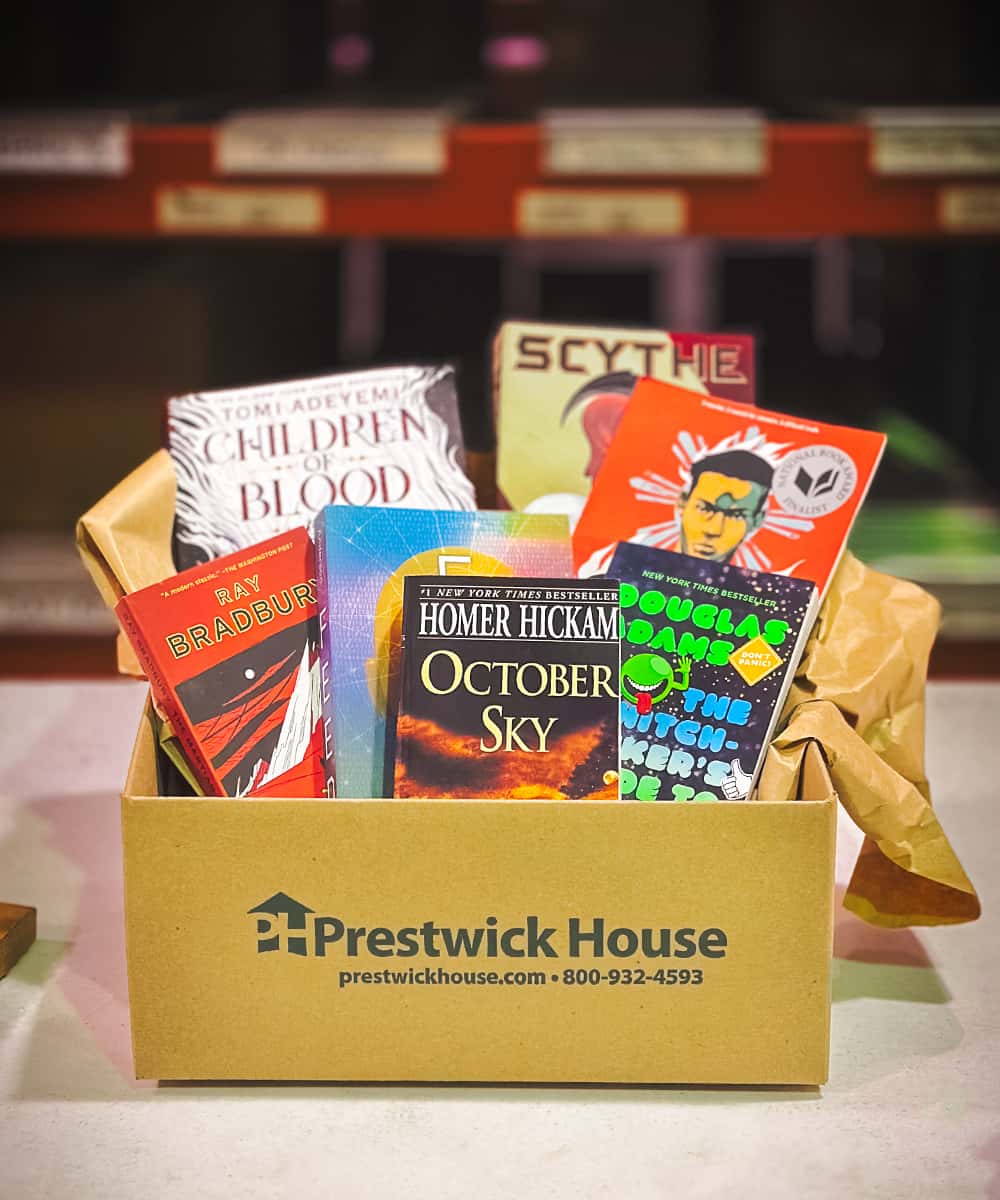
Classroom Library Packs for Grades 4–12
Build the perfect classroom library with discount book sets for elementary, middle, and high school students!