
How to Teach Wuthering Heights
Emily Brontё’s literary techniques and Romantic elements in Wuthering Heights make for an intricate tale, perfect for the high school classroom.

Wuthering Heights is a classic novel that will spur great discussion about the era of Romanticism. Teachers should provide an introduction to Romantic ideals so that students can identify elements of Romanticism throughout the novel. Teaching this novel is great opportunity to incorporate art and history as well by looking at Romantic paintings, Romantic philosophy, and the series of events that inspired the Romantic Movement. Some scholars see the Gothic movement as a subset of the Romantic Movement. Taking a look at the Gothic elements of Wuthering Heights will also help students understand the darker aspects of the novel.
Discussing the frame narrative, characterization, and other important literary techniques will help students interpret the novel. Brontë combines many literary elements in this novel to create a complex and vivid tale. A lesson on the techniques used will help students overcome some of the difficulties in comprehending the story, allowing them to focus on deciphering the 18th century language and analyzing the intricate characters.
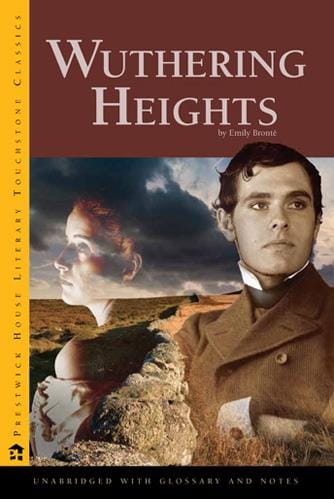
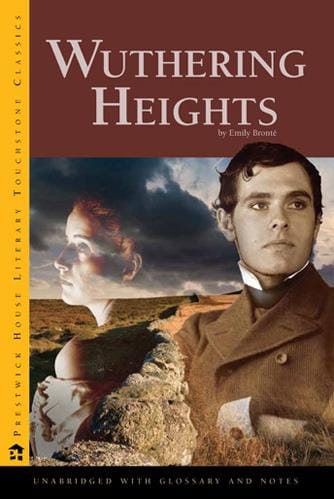
Wuthering Heights
Our Literary Touchstone Classics are unabridged, complete texts, and come with unbelievable prices. Each book is a value-priced, high-quality trade paperback, which you will receive for at least 50% off retail.
Summary
Key Facts:
- Length: 304 pages
- Lexile Measure: 880
- Publication Date: 1847
- Recommended Grade Band: 11 – 12
Emily Brontë's only novel chronicles the life of Heathcliff from his childhood as an orphan to his death. The story unfolds through the accounts of Nelly, the housekeeper, as she informs Mr. Lockwood of Heathcliff's passionate love for Catherine and his desire to seek revenge on those who had wronged him in the past. The Linton's and Earnshaw's bloodlines become intertwined as Heathcliff carries out his revenge plot on the two families that ruined his life and prevented him from being with his beloved Catherine.
Your students will love:
- The realism of the novel
- Vivid descriptions of nature
Students may have problems with:
- Keeping track of the characters' storylines
- Difficult vocabulary
- Understanding the frame story
- Nelly's unreliable narration
Objectives for Teaching Wuthering Heights
- Define Romanticism and discuss the ways in which this story fits the definition.
- Trace the connections between the family at Wuthering Heights and between that of Thrushcross Grange and discuss the impact one generation has on the next.
- Point out the ways in which the character of Heathcliff is a Byronic hero.
- Comment on the role of women in nineteenth-century England in regard to their social and legal rights and responsibilities.
- Discuss the use of metaphor, sarcasm, and foils in the novel.
- Examine the shifting point of view in this story and discuss how this manner of narration has both advantages and disadvantages.
Key Elements and Techniques
- Dialect
- Foil
- Foreshadowing
- Frame Story
- Local Color
- Romanticism
- Unreliable Narrator
Themes and Motifs
Revenge — While there are a few characters who seek revenge in this novel, Heathcliff is the main culprit. After seeing the love of his life marry another man, Heathcliff's life is consumed by revenge. He seeks to correct the injustices—so he believes—of Hindley and Edgar, two men who prevented him from being with his beloved Catherine.
Related Works:
- The Count of Monte Cristo, by Alexander Dumas
- Hamlet, by William Shakespeare
- The Iliad, by Homer
Social Class — Differences in social class drive a wedge between Heathcliff and Catherine. Heathcliff's orphan status and lack of education place him very low in the caste system, unable to reach Catherine; however, after years away from Wuthering Heights, Heathcliff returns as a rich man of a higher class.
Related Works:
- Pride and Prejudice, by Jane Austen
- The Great Gatsby, by F. Scott Fitzgerald
- Jane Eyre, by Charlotte Brontë
Nature vs. Civilization — Nature and civilization are constantly pitted against each other throughout this novel. The characters are either portrayed as a bit wild, like Heathcliff and the Earnshaws at Wuthering Heights, or refined and cultured, like the Lintons at Thrushcross Grange. Awe-inspiring and sublime nature dominates civilized culture in this story, akin to Romantic ideals.
Related Works:
- Frankenstein, by Mary Shelley
- The Scarlet Letter, by Nathaniel Hawthorne
- Lord of the Flies, by William Golding
Movies
There have been several adaptations of Wuthering Heights. The most notable are:
- Willian Wyler's 1939 production
- Robert Fuest's 1970 production
- Peter Kosminsky's 1992 production
- Coky Giedroyc's 2009 production
- Andrea Arnold's 2011 production
External Resources
- Ten Things You May Not Know About Wuthering Heights
- Information about the Moors
- The Reader's Guide to Emily Brontë's Wuthering Heights
- Summary video by Shmoop
- Wuthering Heights: The Roots of Romanticism
- The Romantic Novel, Romanticism, and Wuthering Heights
- Lesson plan from Discovery Education
- Novelinks' guide to Wuthering Heights