
How to Teach The Picture of Dorian Gray
Wilde’s philosophical Gothic horror novel critiques how society values appearance over substance and reveals underlying moral corruption.
Oscar Wilde's beautifully written novel, The Picture of Dorian Gray, is a great way to introduce students to Aestheticism and the Gothic horror novel. An overview of the Aesthetic Movement and Gothic fiction will allow students to better identify elements from the philosophy and genre. As in many of his works, Wilde satirizes Victorian society. Before beginning the novel, students should learn about Victorian morality and social classes. While reading, the class can discuss how Wilde critiques the aristocratic lifestyle and emphasis on appearance over substance.
Wilde also includes a number of allusions, most notably references to Shakespeare's plays and the Greek myth of Narcissus. Students may be somewhat familiar with these references, but further explanation will help them understand the significance of the allusions and how they relate to the novel. Although the Faust legend is not directly referenced, Wilde's novel clearly shares the theme of sacrificing one's soul in an unholy pact. Christopher Marlowe's Dr. Faustus would pair well with this novel and could prompt discussion on how Wilde adapts the legend.
Continue reading to learn everything you need to know about The Picture of Dorian Gray.
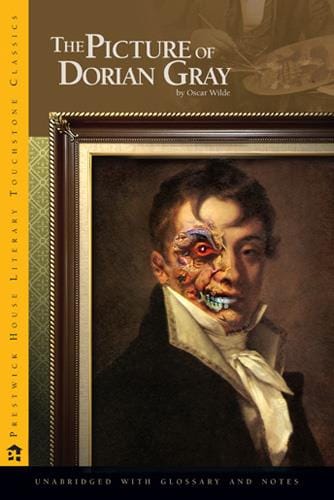
The Picture of Dorian Gray
Our Literary Touchstone Classics are unabridged, complete texts, and come with unbelievable prices. Each book is a value-priced, high-quality trade paperback, which you will receive for at least 50% off retail.
Summary of The Picture of Dorian Gray
Key Facts
- Publication Date: 1891; 2005 (Literary Touchstone Classics edition)
- Length: 208 pages (Literary Touchstone Classics edition)
- Lexile Measure: 920
- Recommended Grade Band: 11-12
Dorian Gray is the subject of a portrait by Basil Hallward, a painter who is enthralled by Dorian's youthful beauty. Through Basil, Dorian meets Lord Henry Wotton, who introduces him to hedonism and aestheticism. When Lord Henry warns Dorian that his beauty will fade, Dorian wishes to trade places with the picture, so that the painting ages while he maintains his youth. The wish is granted, and, as Dorian engages in a decadent, amoral lifestyle, the portrait reveals the corruption of his soul.
Content Warning: The Picture of Dorian Gray contains violent imagery, mild sexuality, and some negative references to Jewish people.
What Your Students Will Love About The Picture of Dorian Gray
- The psychological horror story
- Wilde's witty dialogue and descriptions
Potential Student Struggles With The Picture of Dorian Gray
- The flowery language
- The slow pacing
Learning Objectives for The Picture of Dorian Gray
- Recognize how the mores of Victorian society are reflected in the novel.
- Evaluate Dorian Gray's values of youth and beauty.
- Examine the dark and light sides of human nature and relate these to the characters of Basil and Lord Henry.
- Trace the use of mirrors as images.
- Understand the structure of English society as it is portrayed in the novel.
- Relate Wilde's theory of art to the artistic elements in the novel.
Literary Elements in The Picture of Dorian Gray
- Allusion
- Doppelganger
- Foreshadowing
- Irony
- Metaphor
- Personification
- Simile
- And more!
Major Themes in The Picture of Dorian Gray
Art — Wilde emphasizes his aesthetic beliefs that art has no greater purpose and illustrates the dangers of insisting that art reveals the artist or a moral lesson.
Related Works:
- My Name is Asher Lev, by Chaim Potok
- Speak, by Laurie Halse Anderson
- Girl in Hyacinth Blue, by Susan Vreeland
Beauty and Youth — In the novel, beauty and youth are highly valued, and Dorian goes through great lengths to ensure that his attributes will never fade.
Related Works:
- Sister Carrie, by Theodore Dreiser
- Emma, by Jane Austen
- Tuck Everlasting, by Natalie Babbitt
Corruption — Wilde illustrates how both people and supernatural objects have powers of influence, which allow them to transform people and lead them astray. Lord Henry introduces Dorian Gray to amoral pleasures, and Dorian, in order to preserve his youthful appearance, trades places with his portrait and corrupts his soul.
Related Works:
- Macbeth, by William Shakespeare
- Dr. Faustus, by Christopher Marlowe
- Bodega Dreams, by Ernesto Quiñonez
Other Resources for The Picture of Dorian Gray
- There are many film adaptations of The Picture of Dorian Gray. The best-known version is the 1945 movie of the same title that is filmed primarily in black and white with the portrait in color. It has won an Academy Award, a Golden Globe, and a Hugo Award. (Watch trailer)
- The History of Aestheticism
- The Picture of Dorian Gray: Art, Ethics, and the Artist
- Victorian Era Morality Facts: Moral Behavior, Values, Ideals, Ethics
- List of cultural references in The Picture of Dorian Gray
Order The Picture of Dorian Gray Resources from Prestwick House
| Resource | Format |
|---|---|
| The Picture of Dorian Gray Paperback | Student Edition |
| The Picture of Dorian Gray Teaching Unit | Reproducible Downloadable 30-Book Set |
| The Picture of Dorian Gray AP Teaching Unit | Reproducible Downloadable 30-Book Set |
| The Picture of Dorian Gray Activity Pack | Reproducible Downloadable 30-Book Set |
| The Picture of Dorian Gray Response Journal | Reproducible Downloadable 30-Book Set |
| The Picture of Dorian Gray Multiple Critical Perspectives | Reproducible Downloadable 30-Book Set |
| The Picture of Dorian Gray Complete Teacher's Kit | Reproducible Downloadable 30-Book Set |
This free guide was originally posted in August 2016. It has been updated as of September 2019.