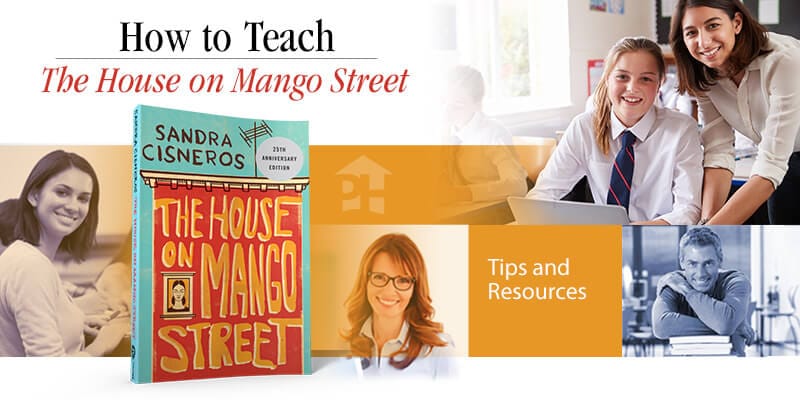
How to Teach The House on Mango Street
Sandra Cisneros’s novel is a coming-of-age story that will spark discussion on themes such as race, poverty, and gender roles.

From a relatable protagonist to a deceptively approachable format, Sandra Cisneros's The House on Mango Street has everything you need to engage your students. The novella features themes involving identity and coming of age as well as a main character who is easy to root for. At the same time, Cisneros broaches topics like racism, misogyny, Latin culture, and poverty, all of which allow for comprehensive analysis in an advanced class—or challenge younger readers to dig deeper.
The House on Mango Street unfolds in short vignettes—an atypical style compared to conventional narrative and plot structures. Additionally, Cisneros herself has described her writing style as "flexible as poetry, snapping sentences into fragments [and] abandoning quotation marks[to]… make the page as simple and readable as possible." With your class, consider the effects of Cisneros's format and style choices: To what extent does Cisneros succeed in her goal to maximize her story's reader-friendliness? How well do the vignettes illustrate Esperanza's experience? Does the author's style better reflect how real-life events and dialogue feel?
It is important to note that the novella's easy-to-read content is richer than it seems. Cisneros's frequent use of metaphor, subtle detail, and poetic language cannot be overlooked. You might also dissect the symbolic significance of certain motifs in the novel, such as feet, trees, and names.
Learn more about Esperanza's journey of self-discovery below!

The House on Mango Street
You'll always save at least 25% on any paperback you order. If the retail value of your order is at least $500, you'll save 30%. And if the retail value of your order is at least $2,500, you'll save 35% on all your paperbacks.
Summary of The House on Mango Street
Key Facts
- Length: 110 pages
- Lexile® Measure: 870
- First Published: 1984
- Recommended Grade Band: 9-10
- American Book Award from the Before Columbus Foundation (1985)
In The House on Mango Street, the charming and witty pre-teen protagonist, Esperanza Cordero, offers glimpses into what life is like growing up in a poverty-stricken area of Chicago. In this first-person narration with short, poetic chapters, Esperanza makes keen observations about race, gender, and aspirations while wrestling with shame over her circumstances. Over time, she learns she must remain determined and goal-oriented in order to evade the fate from which other women in her life failed to escape.
Content Warning:This novel references incidents of physical abuse, sexual abuse, violence, and racism.
What Your Students Will Love About The House on Mango Street
- The episodic, easy-to-read style of the text
- Themes of cultural and social identity
- A loveable protagonist with whom they can relate
Potential Student Struggles With The House on Mango Street
- Understanding some of the cultural context
- References to violence and abuse
Learning Objectives for The House on Mango Street
- Discuss how symbolism and figurative language allow the reader to better understand Esperanza's world.
- Consider the effect of the author's episodic writing style and the novel's unusual structure.
- Explore the concept of "shame of poverty" and how it affects Esperanza's choices and world view.
- Analyze how themes regarding identity, race, and gender develop throughout the story.
- Clarify instances in which Esperanza feels torn between two cultures.
- Determine how the role of women in Esperanza's life shapes her goals for the future.
- Reflect upon how this novel fares as a universal coming-of-age story.
Literary Elements in The House on Mango Street
- Allusion
- Episodic Novella
- Juxtaposition
- First-person narration
- Metaphor
- Personification
- Simile
- Style
- Symbolism
- Theme
Major Themes in The House on Mango Street
Identity — The protagonist is a Mexican American girl living in Chicago who struggles to accept her circumstances.
Related Works:
- The Awakening, by Kate Chopin
- The Importance of Being Earnest, by Oscar Wilde
- The Absolutely True Diary of a Part-Time Indian, by Sherman Alexie
Coming of Age — Throughout the novella, Esperanza develops a sense of responsibility to her community; at the same time, she decides to strive for a brighter future for herself as a writer.
Related Works:
- The Adventures of Tom Sawyer, by Mark Twain
- Jane Eyre, by Charlotte Brontë
- My Ántonia, by Willa Cather
Gender Roles — The stultifying role of women in the novel shapes the protagonist's sense of self.
Related Works:
- A Thousand Splendid Suns, by Khaled Hosseini
- The Secret Life of Bees, by Sue Monk Kidd
- A Doll's House, by Henrik Ibsen
Other Resources for The House on Mango Street
- About Sandra Cisneros
- From NPR: "'House on Mango Street' Celebrates 25 Years"
- Chicago Tribune reporter writes about reading The House on Mango Street as an adult
- Deseret News article: "'House on Mango Street' author tells Salt Lake elementary students to 'dream big'"
- Interview with Cisneros from the Chicago Public Library