

How to Teach The Catcher in the Rye
Salinger's The Catcher in the Rye is a classic novel about the trials of adolescence. Learn more about teaching this book here.
J. D. Salinger's The Catcher in the Rye has been revered as a classic for over half a century because it truly captures what it is like to be a teenager. Holden Caulfield's first-person narration portrays the all-too-familiar anxieties that accompany one's teen years, though the tension is certainly amplified by the narrator's own unique personality and perspective on the world.
Students will relate to Holden's alienation, confusion, and the often directionless path he follows. The book's ending allows for great debate and discussion over whether Holden has changed or developed as a character. Students will feel aligned with Holden and will leave with the understanding that feeling lost does not have to last forever.
Discover more about teaching The Catcher in the Rye below.
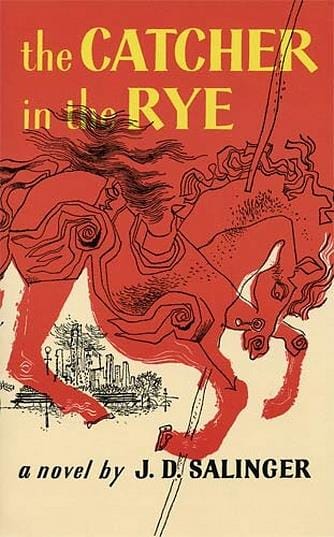
The Catcher in the Rye
You'll always save at least 25% on any paperback you order. If the retail value of your order is at least $500, you'll save 30%. And if the retail value of your order is at least $2,500, you'll save 35% on all your paperbacks.
Summary of The Catcher in the Rye
Key Facts
- Publication Date: 1951
- Length: 214 pages
- Lexile Measure: 790
- Recommended Grade Band: 9-10
Upon hearing the news that he has been expelled from yet another prep school, sixteen-year-old Holden Caulfield decides to embark on a brief series of adventures around Manhattan before he is forced to face his family during the holidays and reveal the disappointing news. For three days, Holden attempts, and miserably fails, to flirt with older women, to reconnect with old lovers and friends, and overall, to appear more genuine, intelligent, and self-aware than the "phonies" by which he claims to be surrounded.
Content Warning: The Catcher in the Rye contains vulgar language and sexual references.
What Your Students Will Love About The Catcher in the Rye
- Holden's sarcastic attitude
- Relating to Holden's outlook on the world
- The easy-to-read, colloquial prose
Potential Student Struggles With The Catcher in the Rye
- Never meeting Jane in the story, even though she's mentioned repeatedly throughout the novel
- Holden's narration; some students may find his perspective to be more annoying than insightful or relatable
Learning Objectives for The Catcher in the Rye
- Discuss why the book uses an interior monologue throughout, and comment on how that style reflects the mind and speech of a sixteen-year-old youth.
- Comment on what type of personality the narrator has, using examples from the text to support that conclusion.
- Discuss the extent to which the book is an example of a "rite of passage" novel.
- Identify and discuss the qualities of the novel that have kept it a classic piece of literature for over half a century.
- Recognize literary terms used throughout the text, including synecdoche, verisimilitude, simile, irony, flashback, etc.
- Trace the several themes that develop throughout the novel.
- Examine the significance of the title and the incidents to which it refers in the text.
Literary Elements in The Catcher in the Rye
- Digression
- Flashback
- Foil
- Hyperbole
- Irony
- Interior Monologue
- Metaphor
- Simile
- Synecdoche
- Verisimilitude
- And more!
Major Themes in The Catcher in the Rye
Superficiality — Holden despises the "phoniness" of the adult world. He believes that hypocrisy, shallowness, and pretension are what make the world an awful place. Holden acts as though he is an honest person surrounded by phonies, but the reader can clearly see that Holden lies, too. In this sense, Holden’s hypocrisy makes him an unreliable narrator.
Related Works:
- The Great Gatsby, by F. Scott Fitzgerald
- Fahrenheit 451, by Ray Bradbury
- Animal Farm, by George Orwell
Alienation — Holden feels as though he doesn't belong, which results in constant loneliness for him; however, the reader must question whether Holden is alienated by society, or if he is alienating himself, and observe the unique consequences associated with those respective conclusions.
Related Works:
- The Awakening, by Kate Chopin
- Crime and Punishment, by Fyodor Dostoyevsky
- Brave New World, by Aldous Huxley
Coming of Age — The novel is essentially the story of Holden Caulfield coming to terms with adulthood and the idea of maturity. The interesting paradox lies in the fact that, while Holden seems to believe he has everyone else figured out, he still manages to exude a rather immature personality that only serves to isolate him from others.
Related Works:
- The Perks of Being a Wallflower, by Stephen Chbosky
- Where the Red Fern Grows, by Wilson Rawls
- It's Like This, Cat, by Emily Cheney Neville
Other Resources for The Catcher in the Rye
- J. D. Salinger's Biography
- Lifting the veil of mystery from J. D. Salinger
- This day in history: Catcher in the Rye is published
- Who Banned Catcher in the Rye and Why?
- The Meaning of the Title: The Catcher in the Rye
Order The Catcher in the Rye Resources from Prestwick House
| Resource | Format |
|---|---|
| The Catcher in the Rye Paperback | Student Edition |
| The Catcher in the Rye Teaching Unit | Reproducible Downloadable 30-Book Set |
| The Catcher in the Rye AP Teaching Unit | Reproducible Downloadable 30-Book Set |
| The Catcher in the Rye Activity Pack | Reproducible Downloadable 30-Book Set |
| The Catcher in the Rye Response Journal | Reproducible Downloadable 30-Book Set |
| The Catcher in the Rye Multiple Critical Perspectives | Reproducible Downloadable 30-Book Set |
| The Catcher in the Rye Complete Teacher's Kit | Reproducible Downloadable 30-Book Set |
This free guide was originally posted in November 2015. It has been updated as of November 2019.