
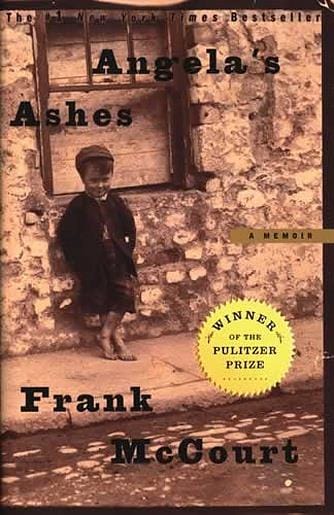
How to Teach Angela's Ashes
Frank McCourt's poignant memoir details a family's struggles with poverty in 1930s-1940s Ireland.
Frank McCourt's 1996 memoir, Angela's Ashes, depicts his family's harrowing experiences of extreme poverty in the southern Irish town of Limerick. McCourt's youth became "a miserable Irish Catholic childhood" when his parents left Brooklyn behind for their homeland, which—though well-intentioned—held disastrous consequences for the family.
While teaching this memoir, it is important to provide students with background information about the Great Depression. This will help students comprehend the motives behind the McCourt family's departure from the United States.
It is also important to note that McCourt's account of his childhood includes brief sexual encounters and moments of criticism directed towards the Catholic Church. These moments are important elements of the story but should be taken into consideration when assessing the intended class's maturity and receptiveness. While students are reading the text, be sure to have open discussions about McCourt's development and shifting opinions on the world around him.
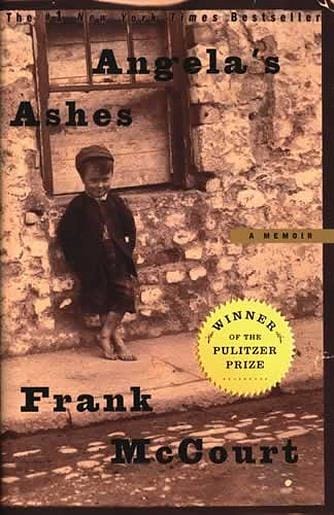
Angela's Ashes
You'll always save at least 25% on any paperback you order. If the retail value of your order is at least $500, you'll save 30%. And if the retail value of your order is at least $2,500, you'll save 35% on all your paperbacks.
Summary
Key Facts:
- Length: 363 pages
- Publication Date: 1996
- Lexile Measure: 1110
- Recommended Grade Band: 9 – 10
Angela's Ashes recounts the McCourt family's departure from Depression-era Brooklyn for Limerick, Ireland. Frank McCourt spends the next fifteen years of his life trying to survive in an area of overwhelming destitution until he is able to return to America.
McCourt's story—though marred by tragedy and the lasting effects of poverty—contains elements of humor that speak to the reader in an engaging and touching way.
Content warning: This memoir contains some sexual content, depictions of alcohol abuse, and critical commentary about the Catholic Church.
Your students will love:
- The feeling of knowing and growing with Frank, the narrator
- McCourt's clear and beautifully written prose
Students may have problems with:
- Keeping track of many characters
Objectives for Teaching Angela's Ashes
- Discuss the ramifications of the McCourt family's move from New York to Ireland.
- Analyze the presence of alcoholism and the trauma of death in Frank McCourt's childhood.
- Determine the historical and political elements that influence the McCourt family in Limerick.
- Elucidate the role of the Catholic Church on Frank McCourt's understanding of his family's hardships.
- Analyze the relationship between Frank and his parents.
- Discuss the meaning of the title of the work.
Key Elements and Techniques
- Allegory
- Comic Relief
- Imagery
- Irony
- Narrator Point of View
- Symbolism
Themes and Motifs
Survival/Resilience — The McCourt family must endure severe hardships at the hands of poverty and the rough Irish environment.
Related Works:
- The Grapes of Wrath, by John Steinbeck
- Night, by Elie Wiesel
- The Glass Castle, by Jeanette Walls
Society & Class — Frank is stuck inside a low-class existence from which he and his family cannot escape.
Related Works:
- A Long Walk to Water, by Linda Sue Park
- The Help, by Kathryn Stockett
- Pride and Prejudice, by Jane Austen
Guilt/Loss of Faith — Frank expresses feelings of guilt throughout the text, believing that his actions and sexual thoughts are responsible for the family's hardships. These beliefs lead to his criticism of the Catholic tradition.
Related Works:
- A Separate Peace, by John Knowles
- The Portrait of the Artist as a Young Man , by James Joyce
- The Things They Carried, by Tim O'Brien
Awards
- Pulitzer Prize for Biography or Autobiography (1997)
- National Book Critics Circle Award (1996)
- Boeke Prize (1997)
Movies
A film version of the novel was released in 1999, and was nominated for an Oscar as well as a Golden Globe award. The movie is R-rated for some nudity, violence, and profanity.
External Resources
- New York Times Review
- Film Trailer
- Frank McCourt's Interview with NPR
- New York Times obituary for Frank McCourt