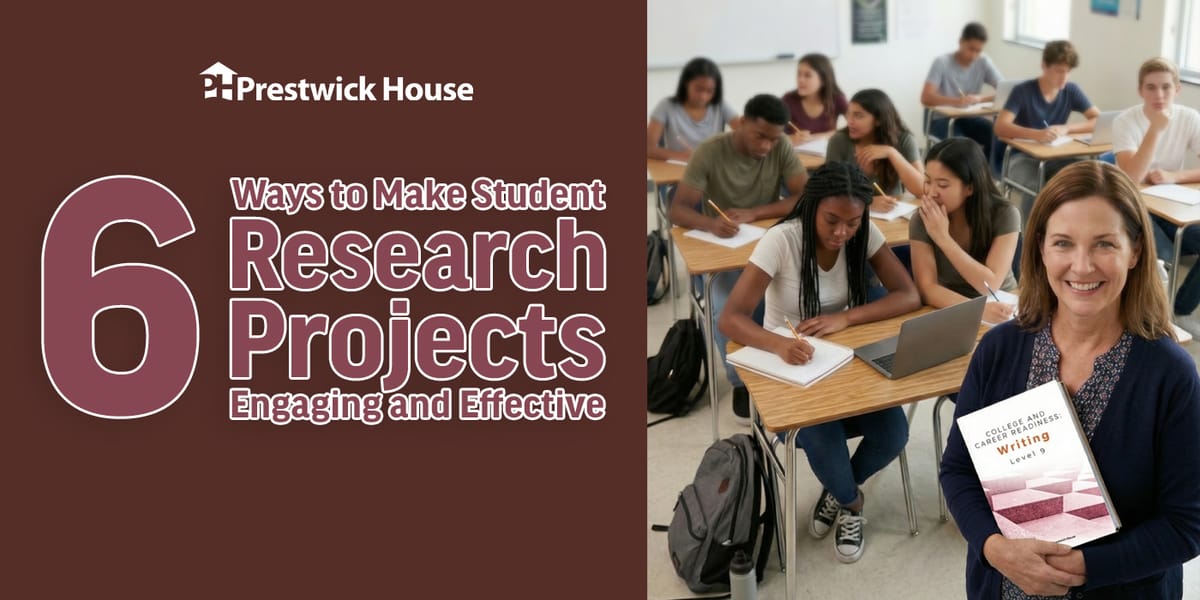
6 Fresh Ways to Make Student Research Projects Engaging and Effective
If you find that the research paper process has become dry, try these ideas to revitalize and modernize your research unit!

The research paper: the cornerstone of any ELA classroom. It’s the culmination of the reading, writing, and critical thinking skills you’ve worked on all year with your students. It’s also a great way to incorporate subjects beyond ELA, as well as student interests.
However, research in today’s world has significantly evolved, and teaching students to build inquiry skills for the real world is the goal. Student research needs to be vetted for accuracy, synthesized into arguable opinions, and presented beyond a paper. If you find that the research paper process has become dry, try these ideas to revitalize and modernize your research unit!
1. Have students research a topic through “progressive inquiry”.
Many teachers are adopting the “progressive inquiry model”, where students develop knowledge collaboratively before pursuing individual research. The idea is to build knowledge about a topic through detailed questioning, rather than simply gathering facts to regurgitate onto paper.
What does this look like in a research project? Gather students into groups, preferably according to similar interests. Students can brainstorm together by posing questions about their topic and developing theories before they start researching (flexing some bonus critical thinking skills!). Then students can start gathering evidence, allowing them to question and revise their hypotheses. Encourage students to return and develop a few new questions that build on their research.
Creating investment in their topic and encouraging exploratory thinking will teach students that research is a never-ending journey filled with fresh questions and progress.
2. Have students create a thesis statement they can stand by.
Often the biggest obstacle students face while building a research project is creating a clear, arguable position. The thesis statement is the foundation of any research project. It needs to take a clear stance, fully answer the prompt, and be researchable. If a student can recognize what a good thesis statement looks like, they can workshop their own, which will help them move forward with confidence.
For a quick exercise in identifying and building an effective, arguable thesis statement, check out this handout from Prestwick House’s Free Library: Writing a Thesis Statement.
3. Before the outline, try a visual research map.
Are students struggling with creating an outline? Introduce tools that map their thoughts and connections visually, helping students see how ideas link together. Of course, you can always have students create an old-fashioned idea web or other topic clustering diagram. However, a research mapping board will make them feel like a real detective!
Ask students to break down their research into big ideas that can support their thesis statement—these could eventually translate into focused paragraphs. Encourage students to use colorful sticky notes with evidence from their sources, or their own analysis, to place on those bigger ideas. They can also use string or drawings to thread together seemingly unrelated ideas that have smaller, more nuanced, connections.
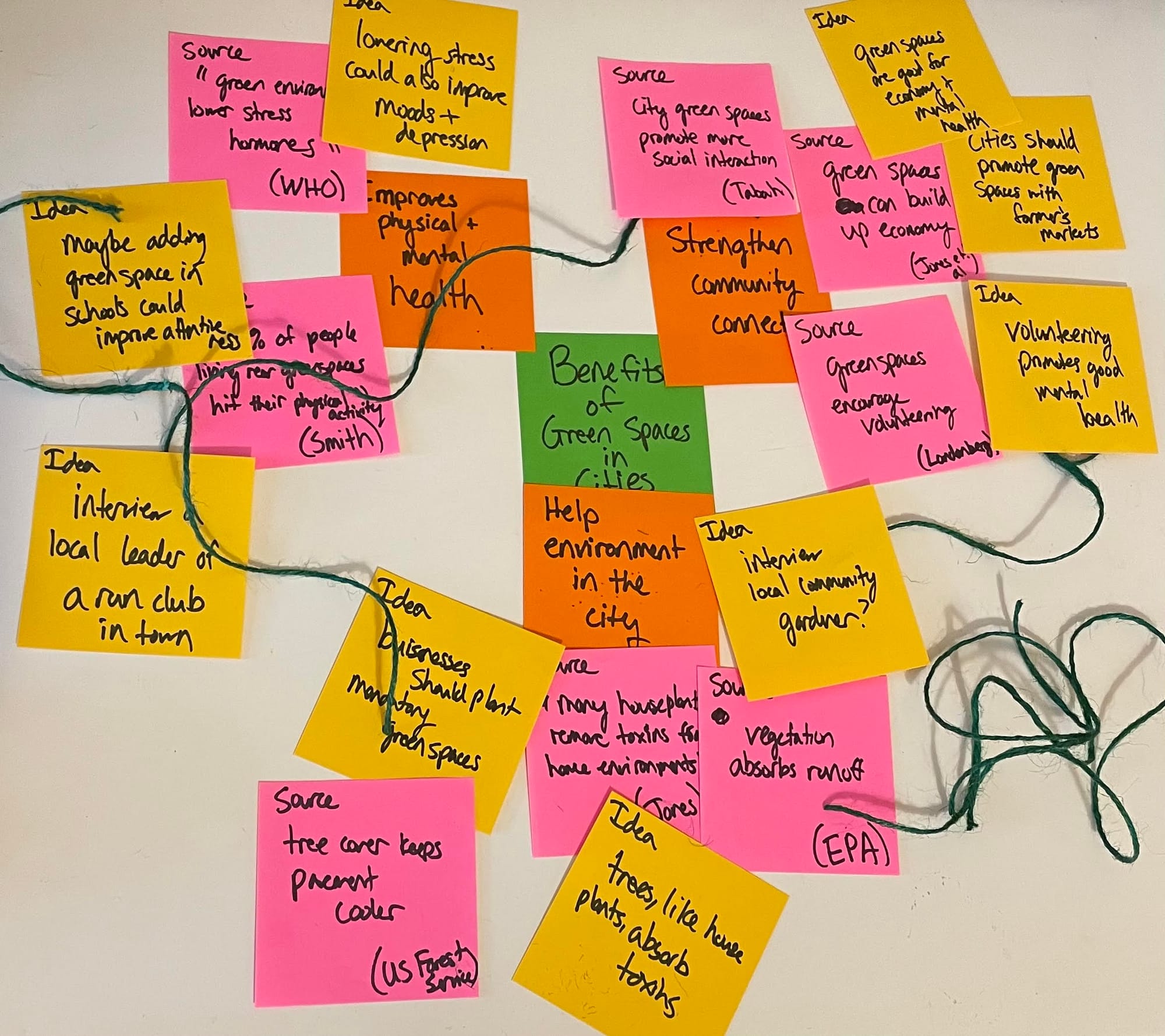
Eventually, students can use this visual map and synthesize it into writing an outline or rough draft. Being able to physically place ideas and research together, or move them around to create new connections, can help students with organization and transitions between ideas.
4. No more “fake news”: Make students evaluate their sources.
In the world of AI, media bias, and sensationalism, how is anyone supposed to find credible, meaningful research? That is part of the importance of a research paper—learning to find sources that have been tested, verified, and deemed unbiased.
While source credibility checking really deserves its own article, focusing on media literacy in the months leading up to the project is crucial. However, you can check student understanding of these concepts with an annotated research trail.
Instead of only grading the final bibliography, assess how students arrived at their sources and how they evaluated them. Throughout the research process, students should track and record search terms they used to find their sources and take screenshots of cross-checking and author or website verification steps. Below each citation, have students write a quick summary of what makes this source credible and how they arrived at this decision.
This careful analysis encourages students to actively think through their sources instead of quickly copying and pasting a few links to meet the quota.
5. The Research Portfolio: Make the research process more approachable with milestones.
Sometimes, a looming deadline for a major paper can leave students feeling paralyzed. So much of a research project’s work is in preparing for it. Why not give students credit for each critical step? The trick is to ensure those steps are meaningful, so students really earn that credit.
Using any of the tips above as checkpoints for your research paper will help students feel accomplished and like their work has been worthwhile. Also, seeing it all compiled into a binder or Google folder shows them exactly how much work they have done, creating a sense of pride!
6. “Research as Creation” Projects
Of course, writing a paper is a valuable skill. However, you may be looking for something to pair with your paper or an alternative. Here are some creative ways for students to showcase their research that may also play into their individual learning styles:
- The Web Designer: For a student who loves coding and web design, creating an interactive website that showcases their research provides something that will live beyond their grade.
- The Podcaster: For the auditory learner, film a YouTube explainer series or mini documentary about their research—complete with visuals that guide the listener through each organized idea.
- The Activist: For a student who is extra passionate about their topic, create a policy brief or local community presentation that could be presented at a town hall meeting, or be sent to a local politician.
- The Archeologist: For the visual or kinetic learner, have the student compile a museum exhibit or escape room for the class to present their findings in a fun, creative way.
- The Politician: For the class debater, have the student present a speech for the class, complete with a question-and-answer session that engages the whole class.
- The Influencer: For the student who always shares a story, have them create a series of infographics that could create a viral sensation about their research. Ask them to accompany these slides with a video of their conclusions with a call to action.
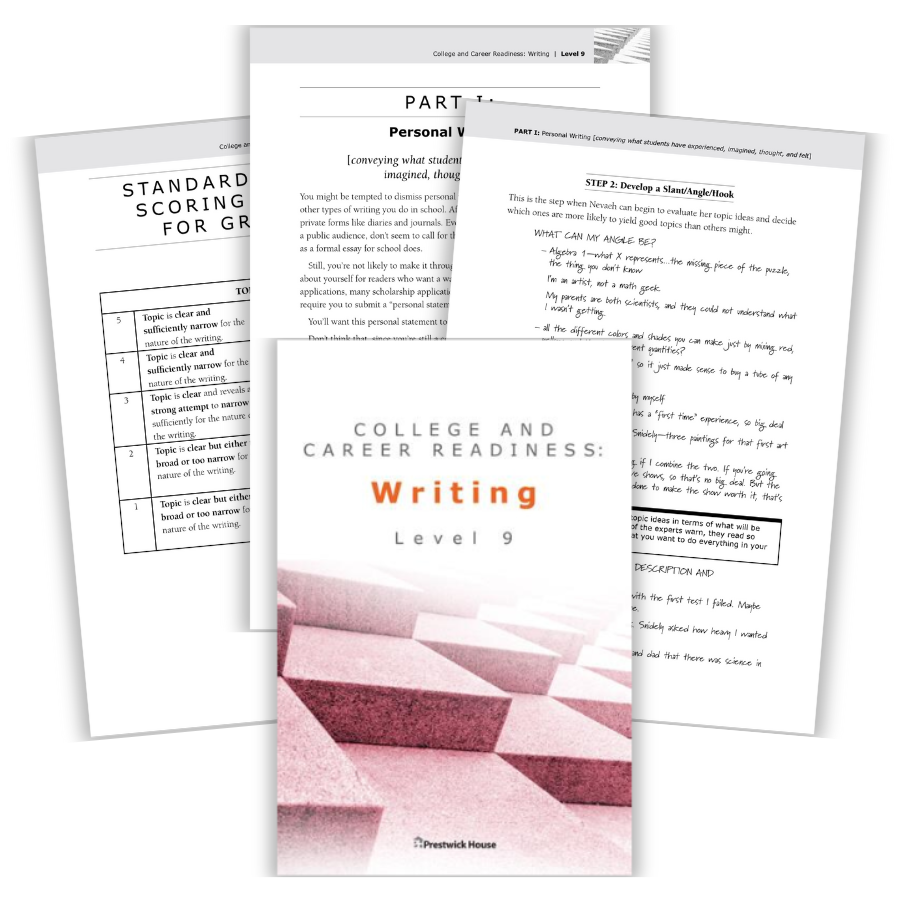
Consider using some of these in your classroom for more engagement and real-world applications for your next research project. For an even more detailed, structured unit that breaks down the research paper, check out Prestwick House’s College and Career Readiness: Writing series.
College and Career Readiness: Writing guides students of all grade levels through the research process from thesis statement to final draft. It also provides model essays to help students learn how to evaluate and refine their writing to ready them for the rigors of college and beyond.